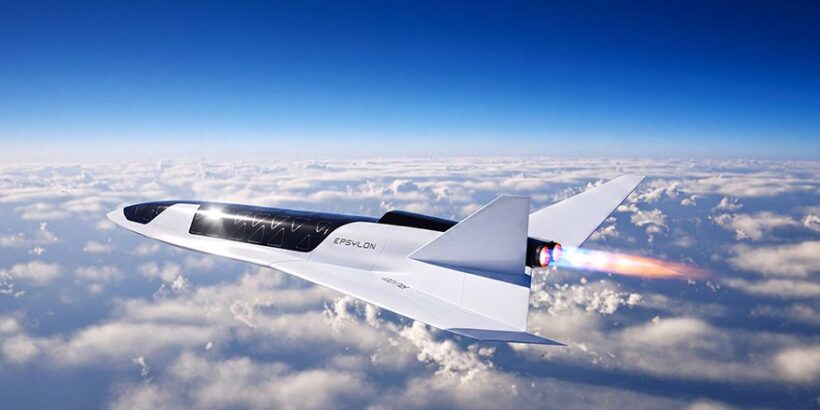
The Russian EPSYLON concept for a supersonic business jet combines variable-sweep aerodynamics with a transformable passenger cabin, illustrating an alternative approach to the design of next-generation high-speed business aircraft.
The concept was developed by St Petersburg-based Asgard design agency, with designer Filipp Avakyan responsible for the cabin architecture and aesthetics. Aerodynamic consultancy was provided by Mikhail Lebedev of the Baltic State Technical University ‘Voenmekh’. Unlike Russian institutional supersonic studies that have primarily focused on aerodynamics, propulsion and sonic-boom reduction, EPSYLON places cabin architecture at the centre of the design.
The concept reflects a wider revival of civil supersonic aviation after the retirement of Concorde in 2003. Current programmes include NASA’s experimental low-boom work, Boom Supersonic’s commercial airliner programme and Spike Aerospace’s S-512 business-jet concept. Russian research organisations, including the Central Aerohydrodynamic Institute (TsAGI), Moscow Aviation Institute (MAI) and State Research Institute of Aviation Systems (GosNIIAS), are also developing supersonic passenger-aircraft concepts.
TsAGI has previously presented a four- to six-seat business-jet configuration with a cruise speed of about Mach 1.7–1.8 and a range exceeding 7,000 km. In 2026 the institute reported receiving a patent covering a supersonic passenger aircraft designed to reduce acoustic impact during the transition through the sound barrier.
MAI presented a different concept at the 2025 International Conference on Aircraft and Spacecraft Sciences and Engineering (ICASSE) in Singapore. The proposed aircraft would carry 48 passengers, have a range of up to 12,000 km, a maximum take-off mass of 45–50 tonnes and a ceiling of about 22.5 km, with a target speed of approximately 3,700 km/h.
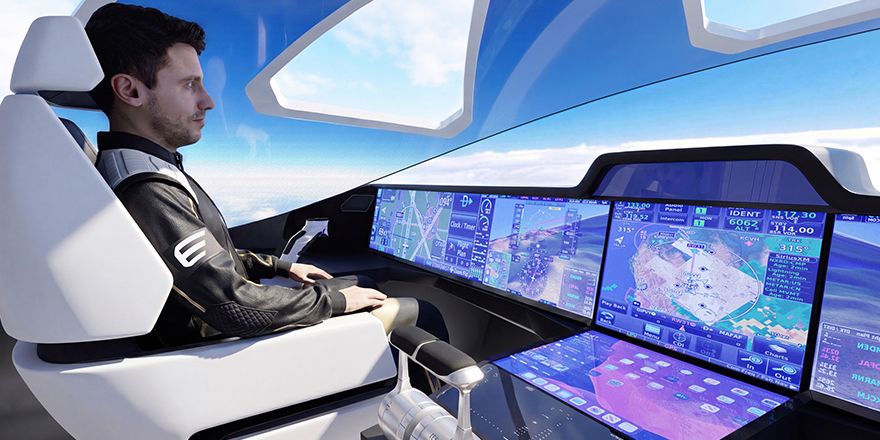
GosNIIAS has separately described a prospective supersonic passenger aircraft derived from the Russian Tu-144 design lineage. Its concept replaces the conventional forward cockpit windscreen with an external-vision system using visible-light and infrared cameras, with imagery displayed on cockpit monitors. Side windows would remain for ground operations. The proposed operating speed range is Mach 1.4–2.0.
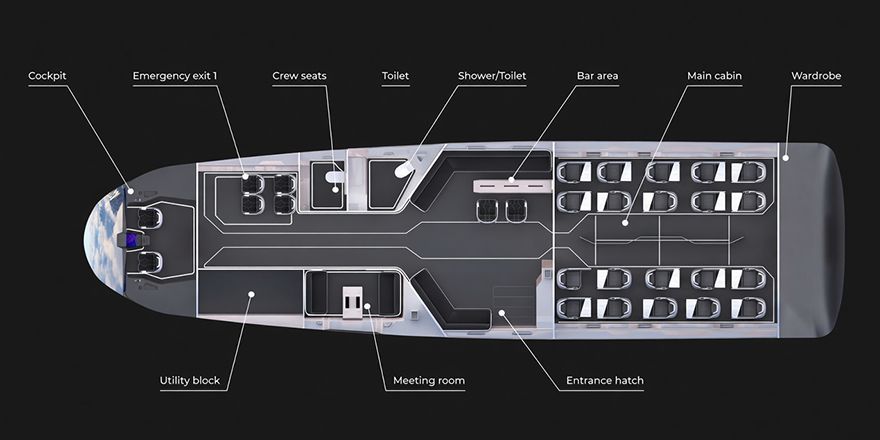
The EPSYLON concept instead focuses on how passengers could use the cabin during a high-speed business flight. Its fuselage is approximately 6.2 m wide and 5.4 m high, with a 25.8 m-long passenger cabin. The concept is therefore substantially larger than the compact cabins proposed for some supersonic business jets.
EPSYLON uses variable-sweep wings, allowing a relatively unswept configuration for take-off and landing and a highly swept configuration for supersonic cruise. Variable-sweep architecture was largely abandoned in civil aircraft development because of its structural complexity, mass and cost. Its use in EPSYLON remains a conceptual proposition rather than an established solution for current supersonic aircraft programmes.
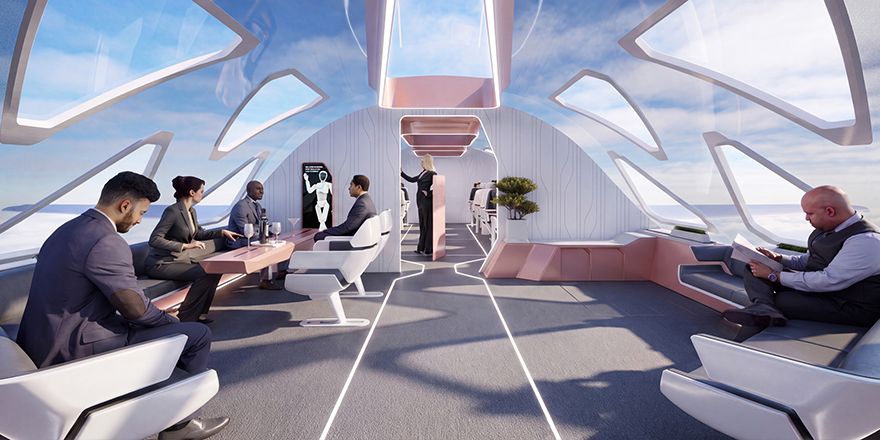
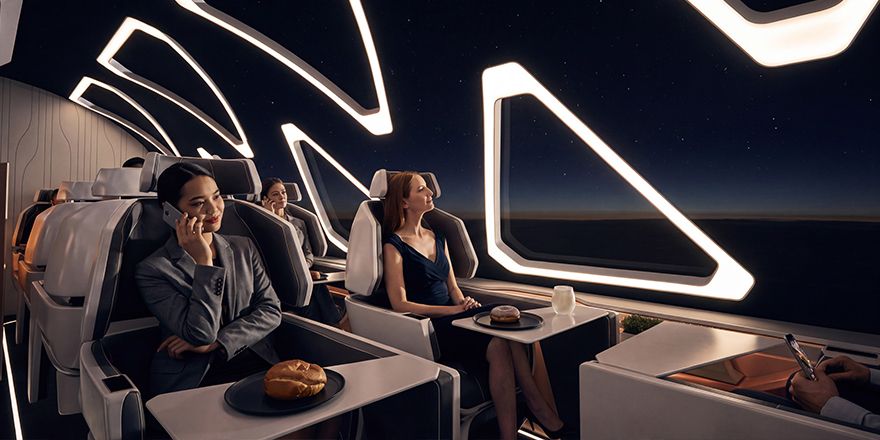
The cabin uses a hybrid approach to passenger windows. Instead of eliminating glazing completely, as proposed for Spike Aerospace’s S-512, EPSYLON incorporates small triangular windows supplemented by adaptive panoramic display panels in the sidewalls and ceiling. The displays could provide an external view or create an alternative visual environment while automatically adjusting brightness and colour temperature.
Spike’s approach uses external cameras and LED displays instead of conventional passenger windows. The concept is intended to reduce structural penalties associated with fuselage apertures and provide greater flexibility in cabin presentation. EPSYLON retains direct visual access to the outside while using digital displays to extend the perceived cabin environment.
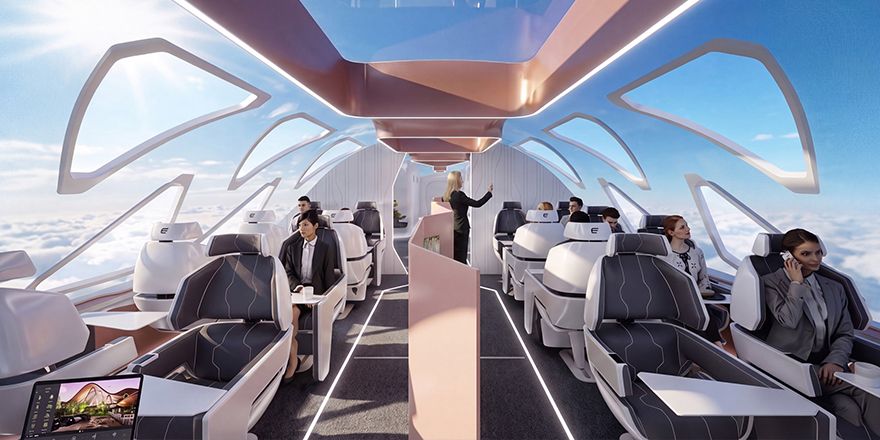
The seating arrangement is also designed to be reconfigured during flight. Passenger seats are mounted on rotating floor columns and can be turned through 360 degrees. Folding tables are integrated into the armrests, while movable partitions equipped with LED panels can divide the cabin into separate working and rest areas or create a common space.
The proposed layout includes a conference room with an interactive table, video-conferencing equipment and acoustic isolation. A lounge area with an automated bar is positioned towards the forward section of the main cabin, while a wardrobe is located towards the rear.
The concept reflects a broader shift in the business case for civil supersonic aircraft. Concorde and Tu-144 demonstrated the technical feasibility of sustained commercial supersonic operations but also highlighted their economic limitations. High operating costs, limited passenger loads and, in Concorde’s case, the effects of the 2000 crash and the post-2001 decline in premium transatlantic traffic contributed to the end of commercial supersonic passenger services.
Current projects are being developed against a different market proposition: a smaller number of passengers paying a premium for reduced travel time. This places greater emphasis on productivity and comfort during the flight, rather than simply maximising seat capacity.
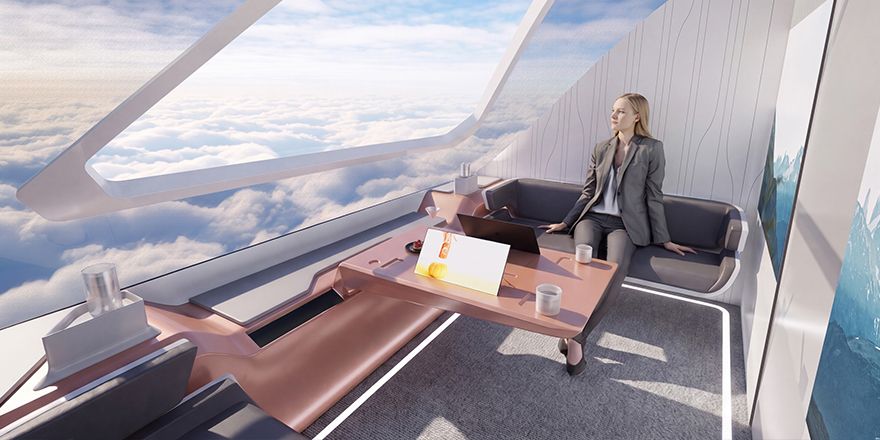
EPSYLON’s cabin concept consequently treats interior space as part of the aircraft’s operational proposition. The ability to switch between individual work, meetings, social interaction and rest is intended to make the cabin useful across different phases of a high-speed business flight.
The concept also illustrates the continuing divergence between engineering-led and design-led approaches to future supersonic aircraft. Russian aerospace institutions have concentrated publicly on aerodynamic efficiency, propulsion, thermal loads and sonic-boom mitigation, while EPSYLON explores the passenger environment that those technologies would have to support.
For next-generation supersonic business aviation, the challenge therefore extends beyond achieving Mach 1.5–2.0 cruise. Aircraft must combine an acceptable operating cost and acoustic footprint with a cabin capable of delivering a meaningful advantage over conventional business aviation. EPSYLON represents one conceptual response to that requirement, although its proposed variable-sweep wing and highly integrated cabin systems remain at the design-study stage.
 (No Ratings Yet)
 Loading...