 RuAviation
Tu-95MC: 63 Years from Prototype First Flight to Combat Debut
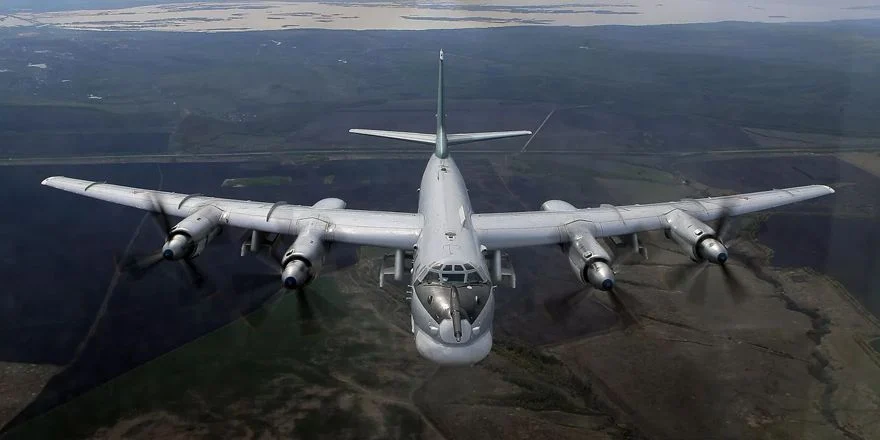
Russia’s Tu-95MC strategic missile bomber entered combat operations in November 2015, marking the first operational use of the aircraft in its 63-year development history. Its deployment in Syria demonstrated the platform’s ability to conduct long-range conventional precision strikes using air-launched cruise missiles, extending the operational role of an aircraft originally developed during the early Cold War.
On 17 November 2015, six Tu-95MC aircraft participated in Russia’s first large-scale strategic aviation strike against militant positions in Syria, according to the Centre for Analysis of Strategies and Technologies (CAST). The bombers launched Kh-555 air-launched cruise missiles as part of a coordinated operation involving Tu-160 strategic bombers and Tu-22M3 long-range bombers. The strikes marked the introduction of the Tu-95MC into an operational environment involving the use of long-range conventional weapons rather than its traditional nuclear deterrence mission.
The campaign also demonstrated Russia’s ability to generate long-range strike missions from domestic airbases without maintaining a permanent overseas deployment of strategic bombers. On 19 November 2015, Tu-95MC aircraft flew from bases in Russia, transited the northern seas and the eastern Atlantic, and launched 12 cruise missiles against targets in Syria’s Aleppo and Idlib provinces from the Mediterranean Sea. The mission involved two aerial refuelling operations. Russian aircraft covered approximately 11,000 km during the operation.
The Syrian deployment provided operational experience in sustained long-range sorties, cruise missile employment and coordination with tanker aircraft and fighter escorts. The weapons configuration also evolved during the campaign. The Kh-555 was used during the initial strikes, while the Kh-101 subsequently became another principal weapon carried by the aircraft. Modernised Tu-95MCM bombers entered combat operations in July 2017.
The Tu-95MC was developed as a dedicated strategic cruise missile carrier, with serial production beginning in 1981. Its airframe was derived from the Tu-142M maritime patrol and anti-submarine warfare aircraft, itself developed through a major redesign of the Tu-95RTs reconnaissance and targeting platform in the late 1960s. This lineage reflects the evolution of the original Tu-95 design into a family of aircraft serving strategic, maritime surveillance and anti-submarine warfare roles.
The prototype Tu-95 made its maiden flight on 12 November 1952. The aircraft entered service with the Soviet Air Force in 1957, with subsequent variants incorporating improvements to propulsion, weapons and onboard systems. By the Tu-95MC’s combat debut in November 2015, 63 years had passed since the first flight of the original prototype.
The Syrian operation established the Tu-95MC’s ability to deliver conventional long-range cruise missile strikes in actual combat conditions. Subsequent modernisation programmes, including the Tu-95MCM upgrade, have extended the platform’s weapons and mission capabilities, allowing an aircraft based on a 1950s design to continue serving as a component of Russia’s long-range strategic aviation force.