 RuAviation
Yakovlev Targets 2028 Completion Of SSJ100 Re-Engining Design Programme
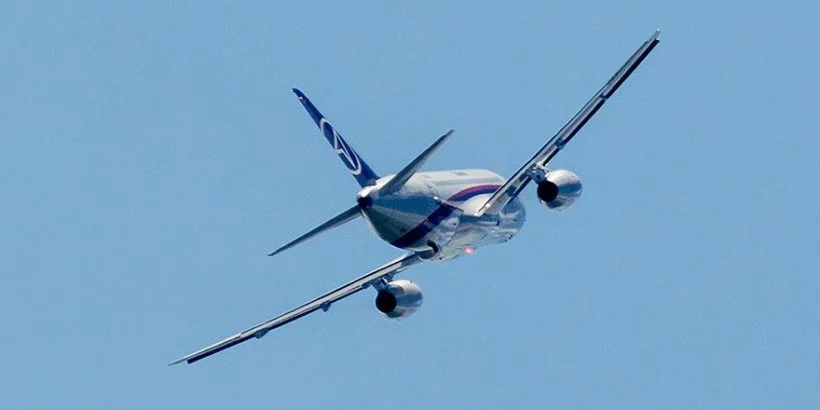
Russia’s Yakovlev is developing a modification package to replace the SaM146 engines on in-service Sukhoi Superjet 100 (SSJ100) aircraft with domestically produced PD-8 turbofans. The engineering programme, scheduled for completion by the end of 2028, is intended to provide an alternative powerplant for aircraft whose continued operation could be affected by the loss of technical support for the Franco-Russian SaM146.
The programme covers three variants of the RRJ-95 family: RRJ-95B, RRJ-95B-100 and RRJ-95LR-100. Its scope includes redesigning affected airframe structures and aircraft systems, developing modification documentation, and validating the installation through ground and flight testing. The work will establish the technical basis for an approved in-service modification rather than an immediate fleet-wide engine replacement.
Yakovlev has divided the engineering development into three stages, with a combined budget of approximately RUB 2 billion (USD 22 million). The first stage, valued at RUB 350 million, covers the definition of required design changes and preparation of the initial engineering documentation. It is due for completion by 26 March 2027.
The second stage, budgeted at RUB 784.9 million and scheduled to run until 20 December 2027, includes detailed design, production and bench testing of modified aircraft components, followed by ground and flight trials of a test aircraft fitted with PD-8 engines. It also covers certification activities and preparation of a service bulletin describing the modification.
The final stage, valued at RUB 865.1 million, will extend the flight-test and certification campaign, finalise design and operational documentation, and compile the compliance evidence required by the aviation authorities to approve the major change to the aircraft type design. Yakovlev is expected to issue the service bulletin once the approval process has been completed.
The programme involves a broad group of Russian aerospace research and engineering organisations, including the State Research Institute of Aviation Systems (GosNIIAS), the State Research Institute of Civil Aviation, the Central Aerohydrodynamic Institute (TsAGI), the Gromov Flight Research Institute, the Aviation Register of Russia, the Central Institute of Aviation Motors (CIAM), and UAC Engineering. A research organisation affiliated with the Russian Ministry of Defence is also listed as a participant.
Russia had 154 SSJ100 aircraft in commercial operation at the beginning of October 2026, according to the Federal Air Transport Agency (Rosaviatsiya). UAC chief executive Vadim Badeha has previously estimated that between 50 and 100 aircraft could potentially require re-engining.
The actual number is likely to depend on the economic and technical condition of individual aircraft. Russia’s Ministry of Industry and Trade has indicated that each airframe will require an individual financial assessment, taking account of its remaining service life and the condition of components that would not be replaced during the conversion. Consequently, the potential PD-8 retrofit fleet is expected to be smaller than the total number of SSJ100s currently in service.
Completion of the engineering programme and approval of the major type-design change will establish the regulatory basis for the conversion. They will not, however, automatically make every in-service aircraft eligible or economically viable for re-engining.