In September 2025, at the XXIV International Conference on Computational Mechanics and Advanced Applied Software Systems in Alushta, a presentation by Mikhail Zhelonkin, Head of Sector at the Central Aerohydrodynamic Institute (TsAGI), was recognized as the best in its category. Zhelonkin’s report focused on innovative methods for pilot awareness during stall conditions, as announced by TsAGI.
Currently, both civil and military aircraft flight management and navigation systems primarily alert pilots to stall conditions using basic visual and auditory warnings. These alerts are typically triggered when critical angles of attack are exceeded or airspeed drops below a set threshold. However, such systems do not account for the full complexity of flight dynamics or analyze multiple parameters simultaneously, which limits their effectiveness in complex spatial attitudes.
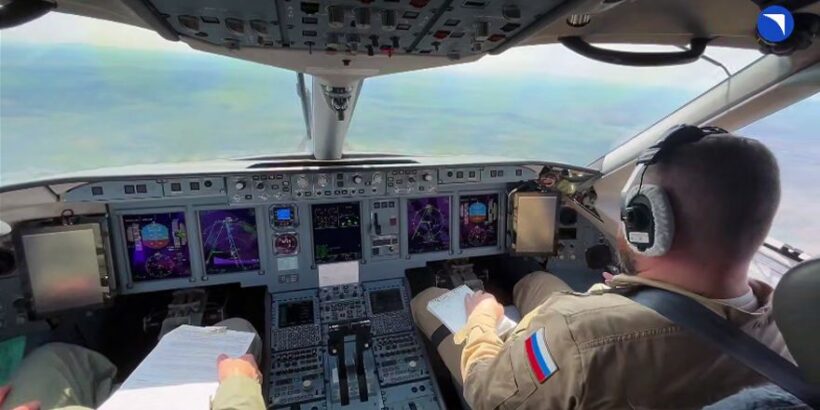
TsAGI’s research, titled “Pilot Information Support in Complex Spatial Attitudes,” aims to develop algorithms capable of detecting stall tendencies at an early stage. The approach leverages big data analysis of aircraft motion, including angular velocity, acceleration, center of mass position, and air pressure sensor data. This enables the generation of specialized information frames for pilots, displayed on standard cockpit indicators, providing more accurate and timely warnings as the aircraft approaches hazardous flight regimes.
Implementing these solutions requires integration with existing flight control systems and close collaboration with test pilots. The new algorithms are being tested both on flight simulators and during actual flight operations with airline specialists. This hands-on experience allows for the adaptation of interface design and alert logic to real-world operational scenarios, minimizing the risk of spatial disorientation and increasing the likelihood of successful recovery from unusual attitudes.
In recent years, both in Russia and internationally, there has been significant progress in integrating artificial intelligence (AI) and neural networks into next-generation avionics. These technologies are designed to enhance stability and controllability, optimize flight performance, and significantly improve flight safety by predicting and preventing hazardous conditions, taking into account the unique characteristics of each aircraft and specific flight conditions.
Automated flight control systems have become a cornerstone in the design of virtually all modern aircraft types and classes. TsAGI is actively working on integrating such solutions into advanced avionics suites. “Currently, these systems are focused on improving stability and controllability, flight performance, economic efficiency, and, most importantly, flight safety,” TsAGI representatives noted.
The Alushta conference served as a platform for knowledge exchange among developers, researchers, and aviation industry professionals. Discussions centered on enhancing the reliability and safety of aviation systems, as well as the prospects for implementing new modeling and data analysis methods in aircraft design.
 (No Ratings Yet)
 Loading...