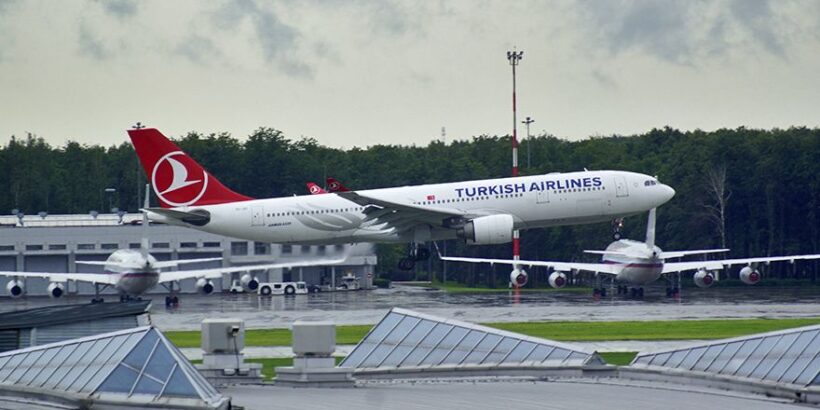
System failures at Istanbul hub leave hundreds of passengers without luggage for up to 15 hours
In early October 2025, passengers traveling on Turkish Airlines flights from Dalaman—a key Mediterranean resort destination—and Istanbul to Moscow’s Vnukovo Airport (VKO) experienced significant baggage mishandling incidents. On October 7, flight TK-3104 arrived at Vnukovo with 62 pieces of baggage left behind. The airline forwarded the missing items on flight TK-413 approximately nine hours later.
The situation escalated the following day. Flights TK-3104 and Ajet VF-277 (Turkish Airlines’ budget subsidiary) arrived without 207 pieces of baggage, to be delivered on flights TK-417 and VF-275 between 12 and 15 hours behind schedule. Vnukovo Airport officials confirmed the incidents to local media.
▌Hub Dependency Creates Vulnerabilities
The disruptions stem from technical and operational challenges at departure airports in Istanbul and Dalaman. Turkish Airlines operates a hub-and-spoke baggage routing model via Istanbul, where all baggage transits through the carrier’s main hub before final destination dispatch. Processing delays at any stage in this centralized network cause baggage accumulation and extended delivery times—a vulnerability inherent to hub-dependent operations when managing extensive route networks like Turkish Airlines’ 340+ destinations.
The timing coincided with the tail end of the Mediterranean tourist season, when Russian tourists return home in peak volumes, placing additional strain on ground handling services and equipment. High passenger loads amplify the risk of system failures and create bottlenecks during check-in and baggage processing, particularly across the airline’s widespread flight geography.
▌Passenger Support Measures
Vnukovo Airport operates a 24/7 contact center for affected passengers at +7 (495) 436-77-60 (Russia country code +7). Passengers collecting delayed baggage must present identification documents, boarding passes, and baggage claim tags. The airport, one of Moscow’s three major international gateways, handles approximately 24 million passengers annually.
▌Systemic Issues Require Operational Review
The recurring nature of these baggage issues indicates Turkish Airlines must review and strengthen operational processes at its hubs and regional stations. This marks the second major baggage delivery failure to Vnukovo within six months—similar systemic disruptions occurred during summer 2025.
Potential root causes include:
– Staffing shortages: Insufficient qualified ground handling personnel during peak periods
– Equipment failures: Technical malfunctions in automated sorting systems
– IT integration gaps: Inadequate synchronization between reservation platforms and baggage management systems
– Hub saturation: Istanbul Airport’s capacity constraints during high-traffic periods
The scale of the disruption—269 pieces of delayed baggage over just two days—significantly exceeds normal operational thresholds. Industry standards from the International Air Transport Association (IATA) recommend baggage mishandling rates below 5.5 per 1,000 passengers. Turkish Airlines’ performance on Moscow routes during this period suggests rates potentially 10-15 times higher than acceptable benchmarks, assuming typical load factors of 150-180 passengers per narrowbody flight.
▌Path Forward
To resolve the issue, Turkish Airlines must enhance oversight and implement additional monitoring mechanisms at all stages of baggage handling, particularly during seasonal demand surges. Airport officials emphasized the need for proactive capacity planning and real-time tracking systems to prevent accumulation delays.
The incidents raise broader questions about operational resilience as Turkish Airlines maintains one of the world’s most extensive route networks. With aggressive expansion in recent years—especially across Central Asia, Africa, and secondary European markets—the carrier’s hub dependency creates single points of failure when Istanbul operations face disruptions. Diversifying baggage processing capabilities and strengthening regional handling infrastructure may prove critical to maintaining service reliability.
Industry analysts suggest Turkish Airlines should consider:
– Deploying additional baggage tracers with real-time passenger notifications
– Increasing buffer times for transfer baggage at Istanbul hub
– Establishing contingency partnerships with local ground handlers at high-volume destinations
– Implementing predictive analytics to anticipate bottlenecks during peak travel periods
As Turkish Airlines positions itself as a global connecting carrier, consistent baggage handling performance will remain essential to competitive positioning—particularly as passenger expectations for service reliability continue rising across the aviation industry.
 (No Ratings Yet)
 Loading...