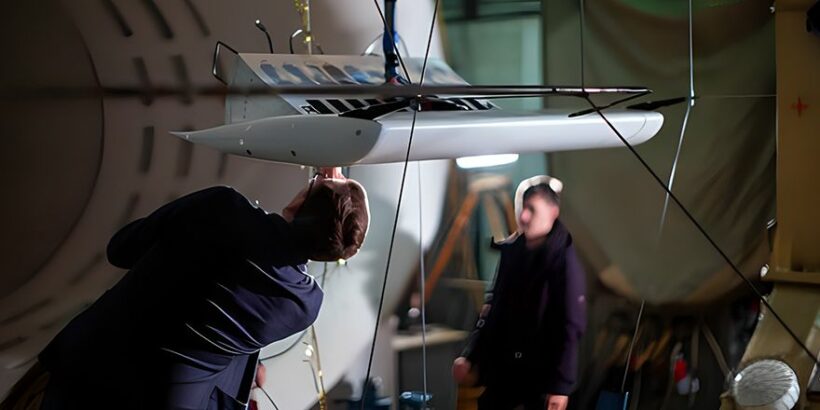
The Federal Service for Intellectual Property (Rospatent) has reported a steady rise in aerospace-related inventions across Russia’s aviation sector. The growth reflects intensified engineering and design efforts supported by national programs aimed at achieving technological self-reliance and modernizing the domestic aerospace industry.
Between 2020 and 2025, Rospatent registered over 3,000 new developments encompassing aircraft, helicopters, unmanned aerial systems, and aero-engines. This surge in patent activity indicates a systemic technological shift within the industry, reinforcing national competencies and establishing a foundation for the next generation of Russian air vehicles.
Comprehensive Patent Activity
According to Rospatent data, more than 16,000 aerospace-related patents were filed between 2002 and 2024. The portfolio covers airframe structures, propulsion systems, aerodynamic components, and onboard avionics. In recent years, patents involving Unmanned Aerial Vehicles (UAVs) have become a significant growth area.
Rospatent Director Yury Zubov emphasized that consistent intellectual property support ensures comprehensive legal protection for new developments and stimulates further technological advancement within the national aerospace sector.
Airframe and Rotorcraft Development
Aircraft and helicopter design remains one of the most dynamic patent categories. Since 2020, more than a thousand new inventions have been registered—ranging from novel airframe concepts to improved components, flight control systems, propellers, and high-lift devices.
Key patentees include the United Aircraft Corporation (UAC), the Mil & Kamov National Helicopter Center, the Zhukovsky–Gagarin Air Force Academy, and the Central Aerohydrodynamic Institute (TsAGI).
TsAGI Innovations
In 2024, TsAGI introduced a regional passenger aircraft concept for 18–24 passengers. The design features an extendable overwing flap system that reduces takeoff and landing speeds while maintaining high cruise efficiency. Two counter-rotating propeller engines are mounted in the aft fuselage, while the center wing box positioned beneath the cabin floor enhances operational reliability and reduces cabin noise.
A year earlier, TsAGI engineers patented a remote-control system for regional aircraft designed to remain functional in the event of centralized hydraulic system failure. The system integrates a computing unit for electromechanical actuator algorithms and an angular velocity measurement module, reducing system weight and simplifying maintenance.
UAC Structural Advancements
In 2024, the United Aircraft Corporation patented a simplified flap attachment system for wide-body, long-range aircraft. The design minimizes weight through kinematic efficiency, reducing the number of hinges and transmitting aerodynamic loads via shorter force paths—enhancing both reliability and ease of assembly.
Growth in Unmanned Technologies
Patent activity in unmanned systems has expanded sharply since 2023, with over 300 inventions filed. These cover UAV designs, control systems, ground support infrastructure, hangars, and cargo transport mechanisms. Leading applicants include Innopolis University, the Federal Scientific Agroengineering Center (VIM), and the V. A. Trapeznikov Institute of Control Sciences of the Russian Academy of Sciences (RAS).
Modern UAVs now serve far beyond reconnaissance and surveillance roles, increasingly used in agriculture, logistics, search and rescue operations, firefighting, and environmental monitoring.
Among notable solutions is an ornithopter—a flapping-wing drone developed by Kuban State Technological University and patented in 2023. It is designed to deter birds from airfields and to assist in wildlife observation.
In 2024, engineers at the Federal Scientific Agroengineering Center (VIM) patented a UAV equipped with three analytical probes capable of determining nitrogen, phosphorus, and potassium (NPK) levels in real time. This system helps farmers monitor soil health and optimize fertilizer application.
Aero-Engine and Powerplant Developments
Since 2020, more than 1,200 patents have been registered in the field of propulsion systems and gas-turbine engines (GTEs). The United Engine Corporation (UEC), the Ufa Engine Industrial Association (UMPO), and the Chemical Automatics Design Bureau (KBKhA) remain among the top patentees.
Engineers at the Ural Works of Civil Aviation (UWCA) developed a telescopic afterburner chamber for small-sized gas-turbine engines. The nested-section design improves engine performance and thrust-to-weight ratio while maintaining compactness for transport and maintenance.
The Gromov Flight Research Institute (GFRI) proposed an axial compressor with adjustable-pitch blades divided into annular segments. By varying airflow incidence angles along the blade span, the system increases compressor efficiency and overall engine performance.
Safety and Testing Innovations
Innovations also focus on improving operational safety and certification testing. In 2024, UAC patented a landing gear mounting system integrated into the wing’s trailing edge. The design minimizes the risk of fuel leakage or fire during emergency landings by incorporating controlled deformation zones around fuel tanks.
The Kazan Helicopter Plant developed a cyclic test method for the central fuselage of light helicopters, simulating “ground–air–ground” load cycles to identify potential structural weaknesses before serial production.
Researchers at Perm Polytechnic University proposed a resonant-type sound-absorbing structure for turbojet engines, reducing noise emissions and offering potential applications across both aviation and ground transport systems.
Conclusion
Rospatent concludes that the growing number and diversity of aerospace patents illustrate a systemic transformation within Russia’s aviation industry—spanning aerodynamics, materials, propulsion, automation, and digital control. Together, these developments mark a transition toward comprehensive technological renewal and competitive self-sufficiency in global aerospace innovation.
Links to original Russian-language patent cards are available on the aviapress24.ru website.
 (No Ratings Yet)
 Loading...