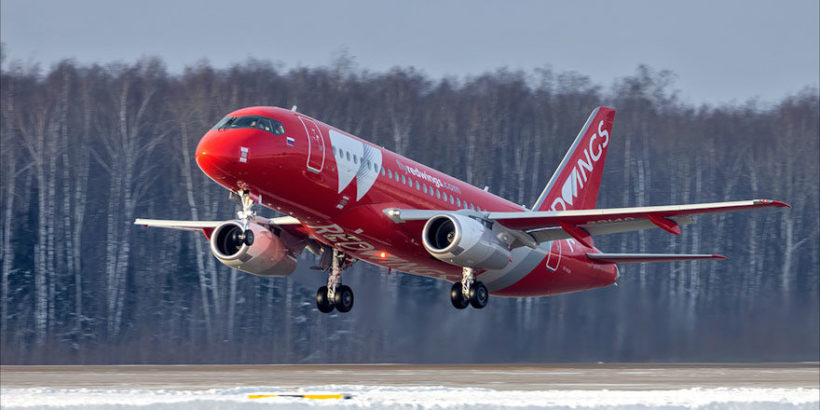
The Sukhoi Superjet 100 (SSJ100) has become a core component of Russia’s civil aviation fleet over recent years. Since entering commercial service in 2011, the aircraft have collectively logged more than two million flight hours, demonstrating reliability and sustained demand on both domestic and international routes. Operational statistics and fleet development prospects were discussed at the third symposium organized by PJSC Yakovlev in Krasnodar.
According to Dmitry Borisenko, Deputy Managing Director for Civil Aircraft Customer Support, around 160 SSJ100s are currently in active service. In 2025, the average daily utilization per aircraft reaches approximately eight hours. Monthly utilization across the fleet ranges from 300 to 370 flight hours, with some aircraft achieving 10–12 hours per day. Despite challenges in component supply due to international sanctions, flight regularity remains high at 97–98%.
Superjets allow Russian carriers to compensate for the partial withdrawal of Western models from the market, maintain schedule stability, and ensure optimal aircraft load factors. Airlines such as Red Wings, Azimuth, and IrAero contribute to domestic passenger growth and the opening of new routes.
Shuttle services between Moscow and St. Petersburg illustrate the SSJ100’s operational structure. Since June 1, 2024, Rossiya Airlines has implemented a “Shuttle” program between the two capitals. Flights from Sheremetyevo to Pulkovo depart every 15 minutes, while departures from Vnukovo operate every 30 minutes. Overall, the program supports up to 72 flights daily. This schedule generates a consistently high daily utilization rate and demonstrates the aircraft’s reliability under intensive operations.
Sergey Stramous, Deputy Head of the Federal Air Transport Agency (Rosaviatsiya), emphasized the role of technical support in regional connectivity:
“Open dialogue among the regulator, manufacturer, cooperating enterprises, and SSJ100 operators not only enhances the efficiency of the existing fleet but also fosters coordinated approaches and practical solutions for introducing new, fully domestic aircraft into service.”
Alexander Dolotovsky, Director of the Regional Aircraft Division at PJSC Yakovlev, added that such symposiums are held regularly. They facilitate improvements in aircraft technology and collaboration procedures with airlines, particularly in anticipation of new import-substituted aircraft deliveries.
SSJ100 operational efficiency relies not only on airframe reliability but also on coordinated technical services. Scheduled maintenance, strategic distribution of spare parts, and continuous monitoring of engines and systems sustain high fleet availability and minimize downtime, even during intensive operations.
Shuttle routes serve as practical tests for the entire support infrastructure. Flight regularity is maintained through optimized resource allocation, engine management, and structured technical planning. This approach brings the aircraft’s reliability and utilization metrics closer to Western standards despite ongoing sanctions.
 (No Ratings Yet)
 Loading...