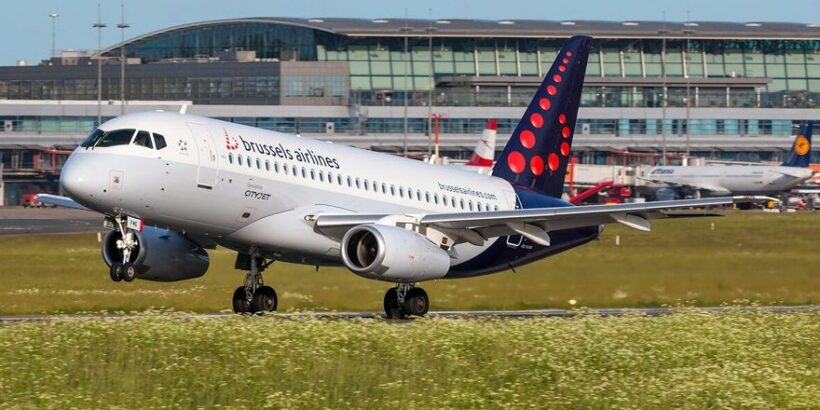
In the article “SJ-100: Strategic Role of the 100-Seat Aircraft in Russia’s Domestic Network”, Alexander Dolotovsky, Deputy Managing Director and Head of the “Regional Aircraft” Division at Yakovlev JSC, highlighted the operational economics of aircraft in the 100-seat category.
According to Dolotovsky, aircraft of this size allow airlines to align capacity more precisely with actual passenger demand and maintain high load factors on medium-haul routes.
SJ-100 and the 100-Seat Segment in Russia’s Regional and Domestic Market
Global aviation experience supports this approach. Choosing an aircraft size that mismatches demand can significantly reduce route profitability, and systematic errors in fleet planning can lead to financial losses. A notable example is Icelandic carrier Play, which operated both European and transatlantic routes through Keflavik Airport.
Play’s network relied on narrow-body Airbus A320 aircraft. While suitable for transatlantic flights to the U.S. and Canada, these aircraft often exceeded demand on European routes, resulting in low seat occupancy and higher operating costs. Aviation economist Oleg Evdokimov identifies this misalignment as a critical flaw in Play’s business model. In an interview with the Icelandic newspaper Morgunblaðið, Evdokimov noted that the company could have benefited from smaller regional jets to better match passenger volumes.
Deploying regional jets with 90–100 seats could have markedly improved economics. European routes could have achieved seat load factors of around 95 %, lowering costs and increasing financial predictability.
SSJ100 Operational Efficiency Surpasses Two Million Flight Hours
Smaller aircraft on short- and medium-haul routes allow airlines to schedule frequency based on actual demand rather than adjusting demand to fit aircraft capacity. In Russia, the SJ-100 shows stable performance on interregional routes with moderate passenger volumes—for example, Moscow to Saint Petersburg—where profitability is maintained at 90–95 % load factors.
High load factors also reduce carbon emissions per passenger and mitigate ETS-related costs. Issues faced by Play, Niceair, and other small carriers stemmed not from market conditions but from flawed fleet and network planning strategies.
Aircraft around 100 seats are most efficient on routes lasting 40–120 minutes with moderate passenger traffic. In Russia, these are primarily interregional routes where larger narrow-bodies would often fly under capacity. Azimut Airlines provides a successful example of this operational model.
The modern SJ-100, equipped with Russian systems, reduces reliance on U.S. and EU suppliers, making it appealing for international operators in countries with limited access to Western aircraft. Interest is particularly notable among carriers in post-Soviet states, with potential applications in Iran, India, North Korea, and selected Latin American markets.
India Plans to Lease SJ-100 Aircraft Ahead of Licensed Production
Analysis of Icelandic carriers’ European operations demonstrates universal principles for profitable regional flight operations. In many markets, the SJ-100 can deliver a sustainable business model where larger narrow-bodies would face chronic underutilization and higher costs.

 (5 votes, average: 4.20 out of 5)
 Loading...