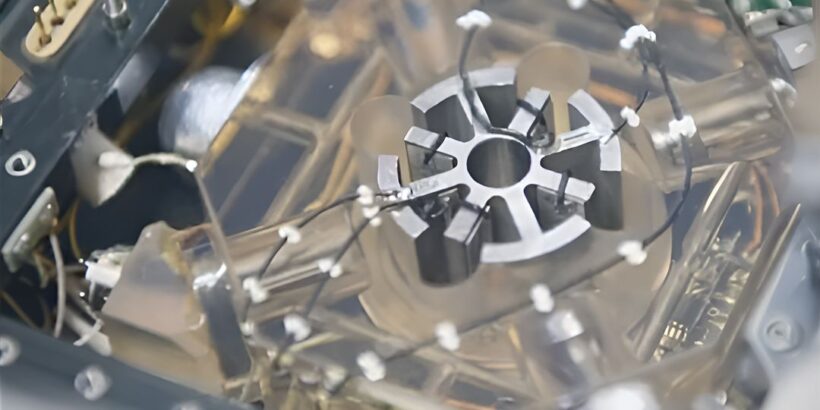
Russian defense electronics group Rosel, part of the Rostec state corporation, has developed a new electronic warfare (EW) jamming module designed for mobile EW systems. The unit is intended to counter unmanned aerial systems (UAS) by disrupting command-and-control links, telemetry channels, and video downlinks, according to Rostec.
The module generates jamming signals across designated frequency bands, degrading RF link quality, reducing channel robustness, and ultimately impairing UAV controllability. It is designed to engage a wide range of targets, including small and medium-sized UAV platforms operating on various communication architectures.
The system is built on a modular architecture and consists of configurable functional blocks tailored to mission requirements. This design approach simplifies integration into existing EW suites and enables capability expansion without major redesign of the base platform. The module can be deployed on wheeled vehicle-based mobile EW stations or integrated into fixed-site protection systems.
The growing use of strike UAVs against critical infrastructure and civilian assets in Russia has increased demand for layered air defense architectures. In high-density, low-altitude threat environments, conventional kinetic interception systems face constraints in response time and ammunition expenditure. Under these conditions, EW suppression systems act as a primary engagement layer, reducing aerial target density and redistributing workload to air defense assets protecting ports and oil and gas infrastructure.
 (No Ratings Yet)
 Loading...